










B.C. Strata Reform: Why Training and Digital Governance Must Go Hand in Hand
February 19, 2026 | B.C., Property Management, Software, Strata | Property management
Recent calls from the BC Real Estate Association (BCREA) and the Association of Interior Realtors (AOIR) for a full review of the Strata Property Act, as highlighted in a recent article by REMI Network featuring CCI BC Chapter President Sean Ingraham, have sparked an important conversation across British Columbia.
With more than 1.5 million British Columbians living in strata properties, the legislation that governs these communities has not undergone a comprehensive modernization in over 25 years. Meanwhile, the complexity of strata developments, regulatory requirements, and digital expectations has evolved dramatically.
The message from industry leaders is clear: governance structures must adapt to today’s realities.
But this conversation is about more than legislative reform. It is about infrastructure.
The Growing Pressure on Strata Governance
The Strata Property Act defines how strata corporations operate, how councils make decisions, and how essential information is delivered. Yet many of the processes embedded in the system were designed before widespread digital adoption.
Recent concerns highlight recurring issues:
- Delays in delivering Form B Information Certificates
- High and sometimes unregulated rush fees
- Incomplete document packages
- Inconsistent record-keeping practices
- Limited transparency of activity and transactions
In a market where transactions move quickly and buyers expect immediate access to reliable data, these inefficiencies create friction, uncertainty, and risk.
When buyers are asked to review hundreds of pages of technical documents under tight timelines, and access to this information depends on manual processes or fragmented systems, initiative-taking self-service governance becomes reactive at best.
Mandatory Training Is a Step Forward
BCREA’s proposal for mandatory strata council training acknowledges a fundamental reality: today’s strata corporations are more complex than ever.
Mixed-use developments, shared amenities, air space parcels, evolving rental regulations, depreciation report requirements, and increasing reserve fund obligations demand a higher level of financial literacy and governance competence.
Volunteer council members face mounting responsibilities. Providing structured education can establish a baseline of knowledge and reduce preventable governance failures.
But training alone is not enough.
Governance Without Digital Infrastructure Falls Short
Education improves understanding. Digital infrastructure improves execution.
Even well-trained councils struggle when:
- Documents are scattered across email accounts and personal drives
- Financial data is difficult to access or interpret
- Record retention practices vary from year to year and board to board
- Access controls are inconsistent
- Transaction documentation must be compiled manually
- Information security is not assured
Modern governance requires centralized, secure, and role-based access to information. It requires systems that ensure documents are complete, searchable, and immediately available. It requires financial transparency that does not depend on manual assembly.
Without digital tools that support clarity and accountability, governance reforms risk being limited in impact as compliance becomes burdensome.
The Case for Modernized Strata Operations
Other industries have already adapted to real-time information delivery and self-access. Banking, healthcare, and professional services have standardized secure digital access to documentation and financial data.
Strata communities should expect the same.
Digital modernization does not simply mean storing files online. It means:
- Structured document management with controlled access
- Real-time financial visibility for councils
- Audit-ready reporting
- Transparent communication logs
- Secure, traceable information delivery
- Reduced dependency on manual processes
- Information security
As legislative complexity increases, the systems supporting strata corporations must become more resilient and efficient.
Empowering Councils and Strengthening Communities
Strata councils are the backbone of community governance in British Columbia. Most are composed of volunteers balancing professional careers, family obligations, and increasing regulatory demands.
Providing education strengthens knowledge.
Providing digital tools strengthens execution.
When councils have access to centralized records, structured financial reporting, and secure document management systems, they can:
- Make informed decisions faster
- Reduce disputes
- Improve transparency with owners
- Strengthen compliance
- Reduce reliance on fragmented workflows prone to error
This builds trust within the community, which is the ultimate goal.
The Future of Strata Governance in B.C.
The current discussion around reforming the Strata Property Act reflects a broader shift in expectations. Buyers, owners, and real estate professionals increasingly expect:
- Immediate access to accurate information
- Transparent governance
- Digital-ready documentation
- Clear accountability
Legislative updates and training programs are important. But lasting improvement will depend on whether strata corporations adopt modern governance infrastructure that aligns with today’s digital environment requirements.
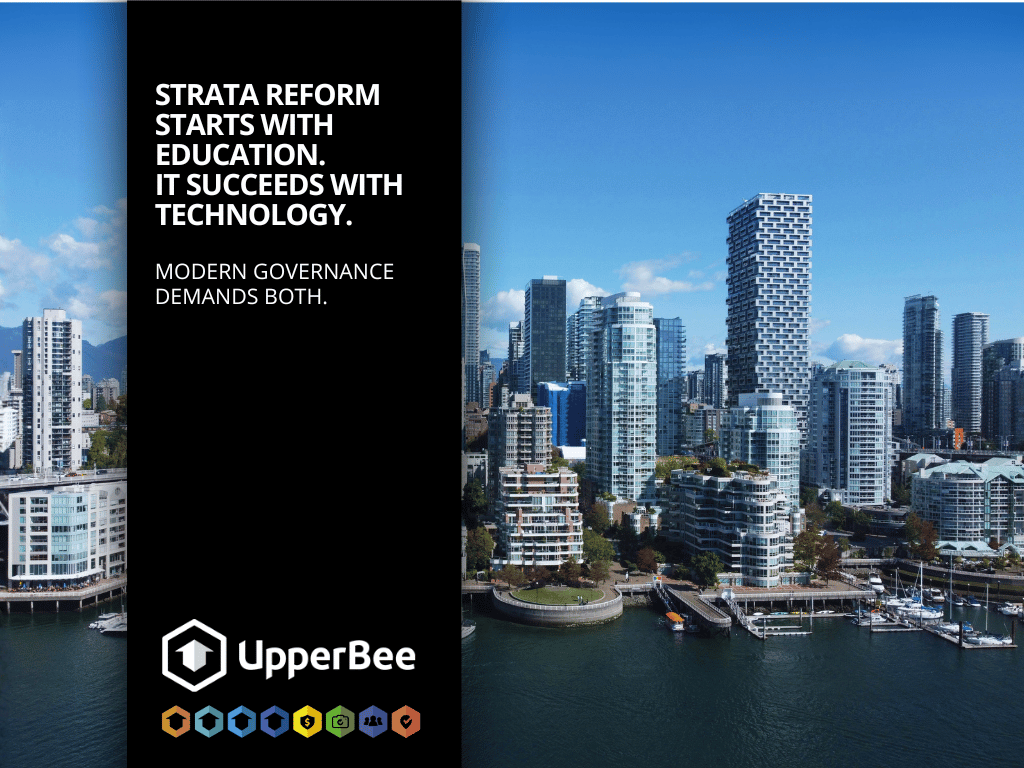
Strata living continues to grow across British Columbia. Supporting these communities requires more than regulatory adjustments. It requires a framework where education, technology, and accountability work together.
The future of strata governance is not only better trained.
It is better equipped.
At UpperBee, during our close to two decades of operation, we have watched this shift happen across Canada and prepared for it.
Our belief that digital governance will define the next era of strata management is incorporated in what we do and the products we deliver.
Mark Alan Bush
Vice President – Business Development
Source
This article was inspired by a recent piece published by REMI Network featuring CCI BC Chapter President Sean Ingraham discussing calls from B.C. realtors for a full review of the Strata Property Act.